You are likely familiar with the benefits of a home full of natural light: it helps conserve energy, and it’s good for your health in a number of ways (it shapes your circadian rhythm, improves your mood, and is easier on your eyes). Daylight reveals materials and connects you to the space around you—it is an incredible resource—however, when brought into a space, it needs to be carefully controlled. Here are several considerations that we keep in mind when inviting in natural light:
Play the angles
There’s a famous Emily Dickinson poem about “a certain Slant of light…That oppresses.” No one wants “oppressive” light in the home. This is why we leverage indirect light to create livable spaces.
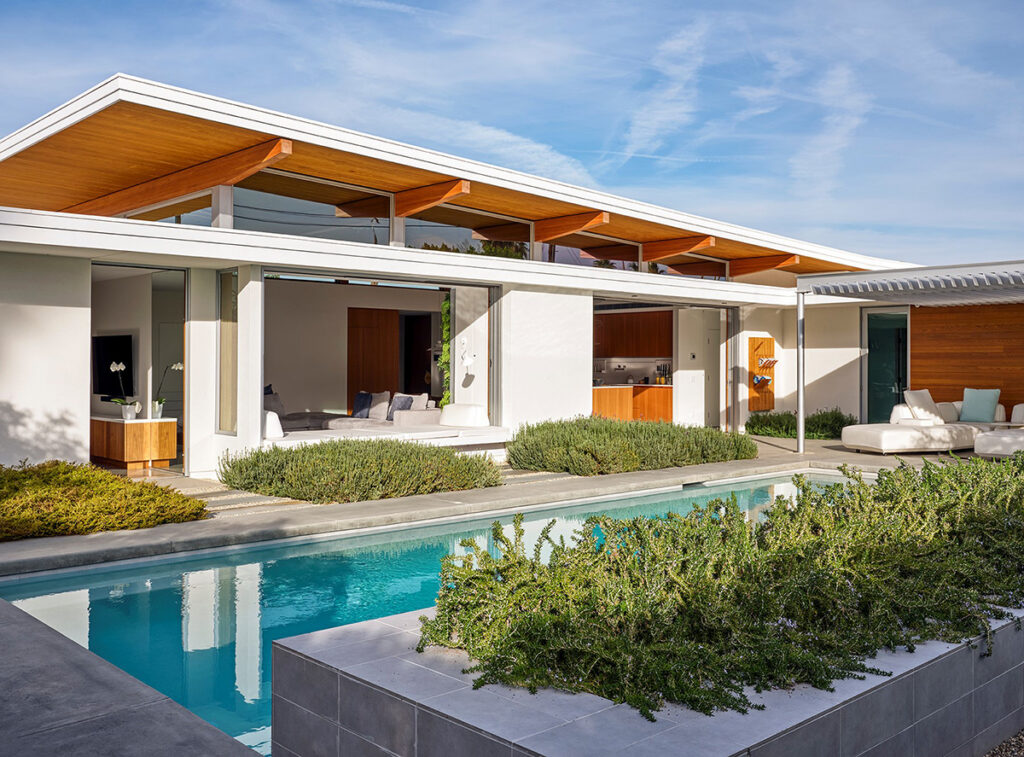
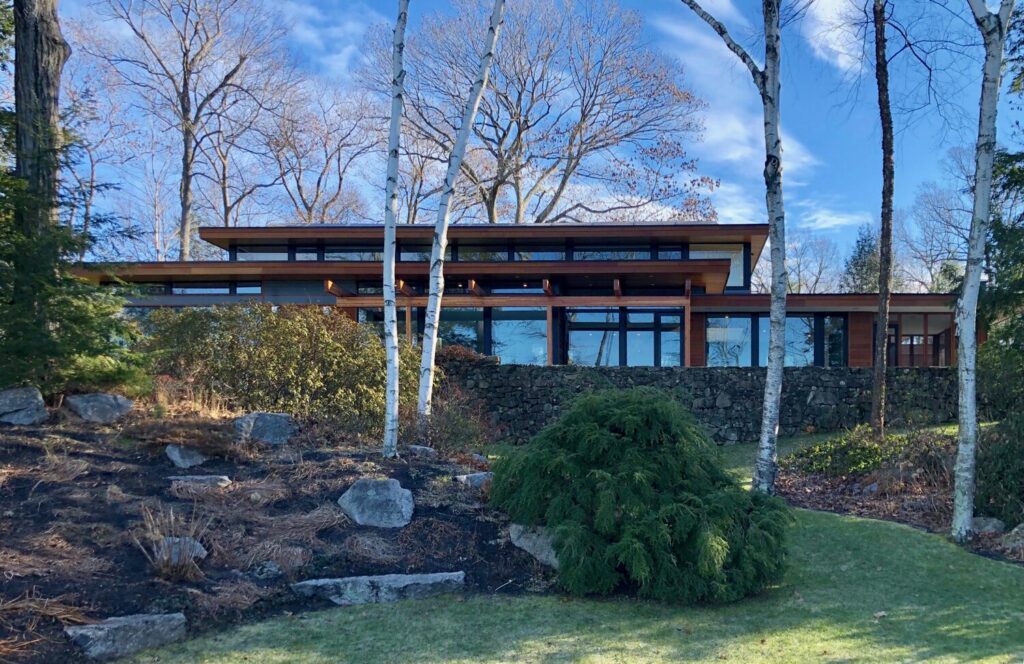
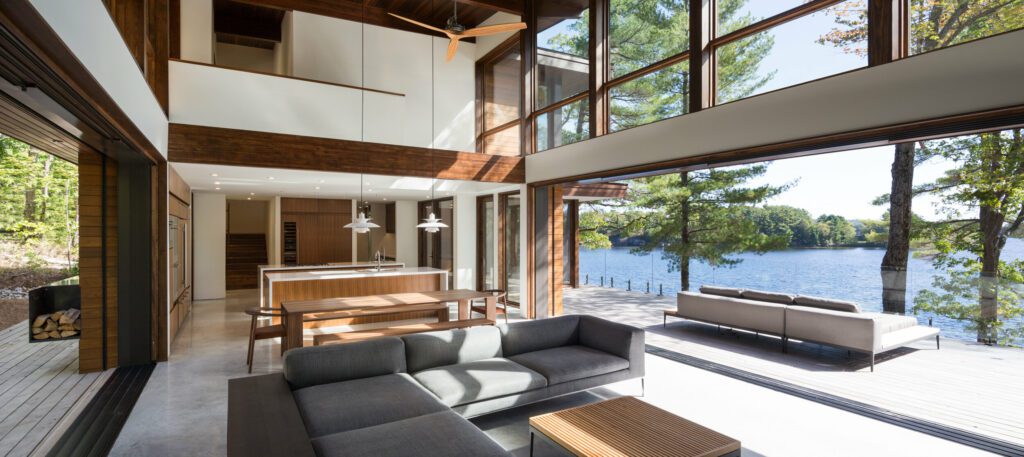
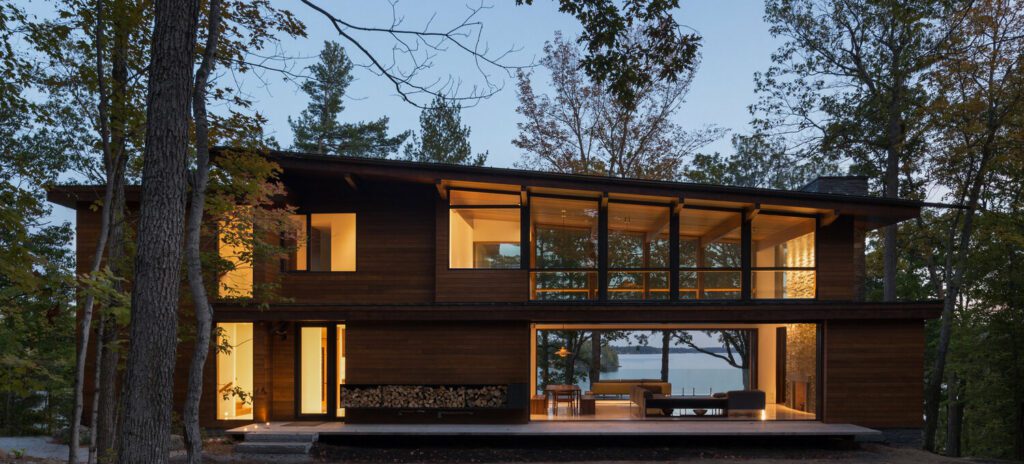
Many of our homes create a seamless threshold between indoor and outdoor living via retractable walls of glass. However, the effect of direct sunlight on floor-to-ceiling glass at certain times of year can be, well, oppressive. To prevent this, we design overhangs that are sized specifically for the home, based on its location and orientation, to shield the glass from direct sunlight to prevent overheating.
Each Turkel Design project begins with a site analysis that includes a thorough study of the position of the sun each day throughout the year. This tells us how to orient the home on your land so that it makes the most of its relationship to sunlight: bringing it into the spaces when desired and keeping it out of the spaces when not.
Balance is best
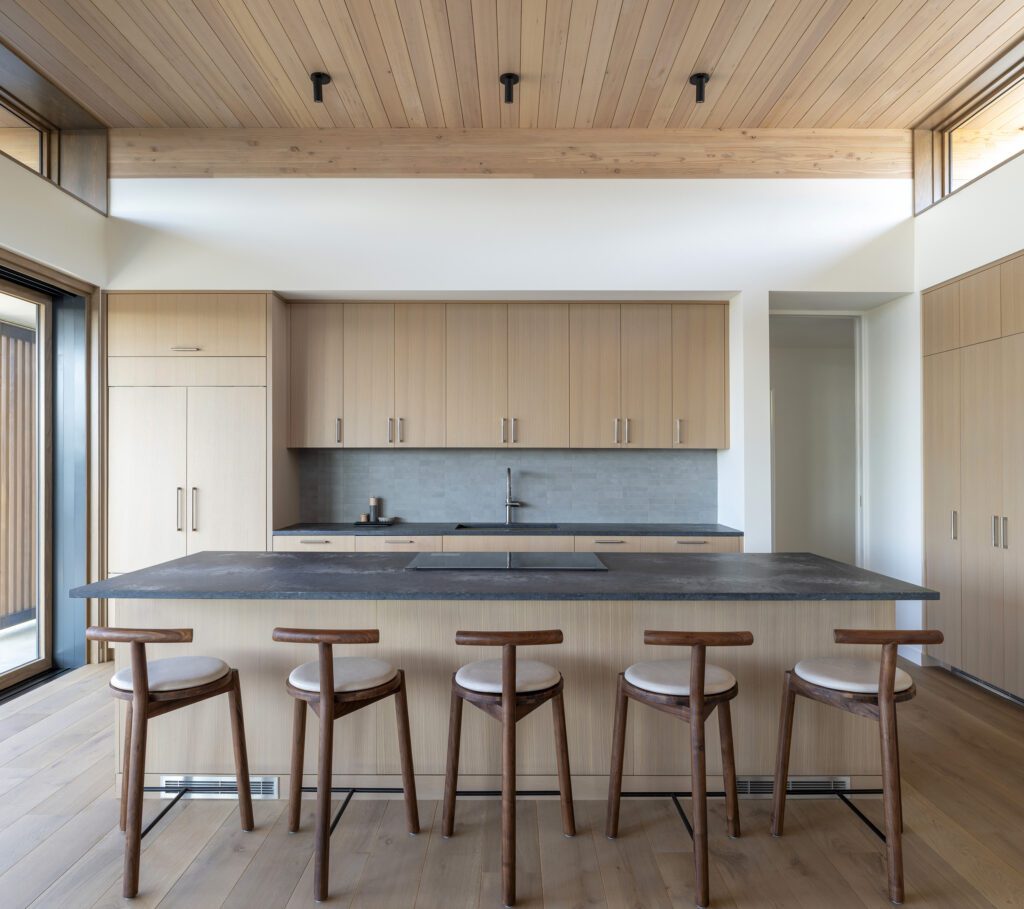
A single source of light can introduce glare and leave a room feeling off balance. To ensure that the benefits are spread evenly throughout the home, we incorporate balancing light sources for each space.
Clerestory windows are an effective strategy for welcoming light into an open great room, particularly if the home’s glass view façade is contrasted with a private entry façade. Clerestory windows on either side of the home ensure that natural light reflects off the mid-level roof and fills the space with indirect light while maintaining the appropriate level of privacy.
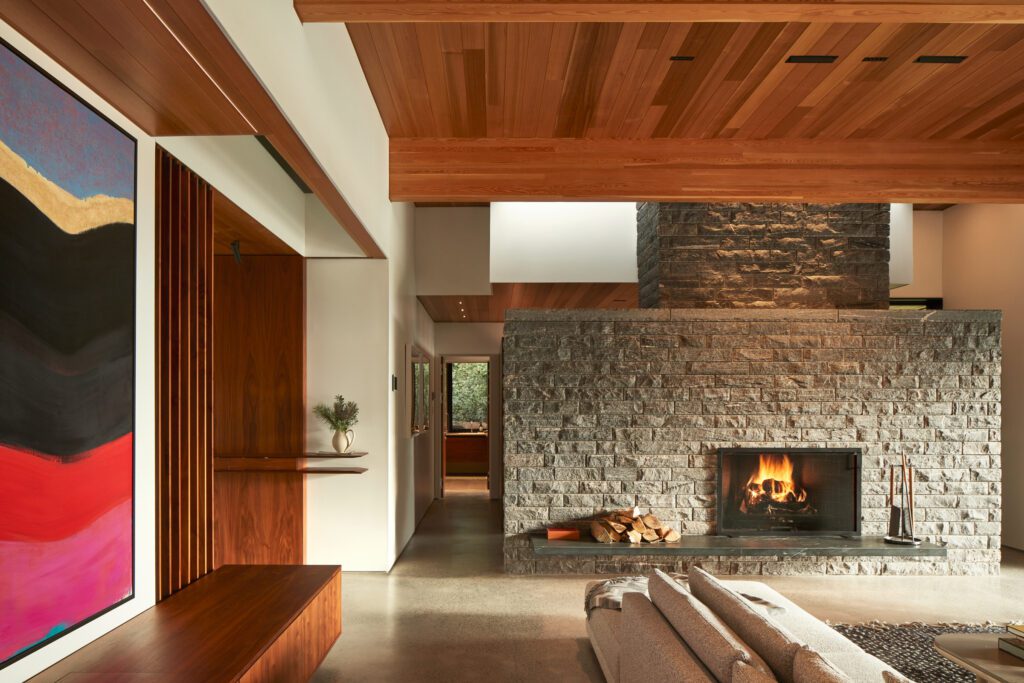
Another method for achieving this sense of balance is with a lightwell. A lightwell can “wash” a wall with light, bringing illumination to spaces deep within the home. In the great room shown above, notice how the lightwell highlights the beautiful texture of the stone fireplace.

Don’t forget function
Because the various spaces within a home serve different purposes, some may be more suited to an influx of natural light than others. A media room or wine cellar is best tucked away from clerestory windows and lightwells. But elsewhere, natural light can imbue a room with a sense of purpose. For example, the breakfast nook shown above is positioned for maximum exposure to the morning light that illuminates the meadow seen through the large windows.
That light source is balanced by—you guessed it—a lightwell, which not only brings in light from various directions throughout the day, but also connects the nook to a separate space above: a studio, in which the homeowner can access inspirational views in multiple directions. Regardless of the time of day, the intensity of the sunlight is tempered via appropriately sized overhangs shielding each window. This recipe for warm, balanced, natural light creates an ideal space for yoga and painting.

Illuminating your best life
At Turkel Design, we begin by learning about your lifestyle, then employ time-tested design strategies to create a custom work of architecture just for you.
Contact us to discuss how you want to live.
Top photo by Millicent Harvey; second photo by Draper White; final three photos by Maxime Brouillet
 English
  Français
  한국어
한국어  Español
  简体中文
简体中文